
If you’ve been told you have degenerative disc disease, you’re probably wondering what it means for your future. Will you always be in pain? Can you still stay active? Is surgery inevitable? These are questions we hear often here at The Mauldin Clinic in Mauldin, SC. The good news is that despite the alarming name, degenerative disc disease isn’t actually a disease at all, and with the right approach, most people can manage their symptoms effectively and maintain an active, fulfilling life. Understanding what’s happening in your spine and taking proactive steps can make a significant difference in how you feel today and in the years to come.
What is degenerative disc disease? Degenerative disc disease is a condition where the intervertebral discs in your spine lose hydration, height, and flexibility over time, leading to back pain, stiffness, and sometimes nerve-related symptoms. It’s a natural part of aging for many people, though symptoms and severity vary widely from person to person.
Table of Contents
- Understanding Your Spinal Discs and How They Change
- Common Causes and Risk Factors
- Signs and Symptoms to Watch For
- How Chiropractic Care Fits Into Treatment
- Prevention Strategies That Actually Work
- Daily Management and Lifestyle Modifications
- When to See a Chiropractor
- Myths vs. Facts
- Final Thoughts
Understanding Your Spinal Discs and How They Change
Your spine contains 23 intervertebral discs that act as cushions between the vertebrae. These discs have two main parts: a tough outer ring called the annulus fibrosus and a gel-like center called the nucleus pulposus. Together, they absorb shock, allow flexibility, and help distribute forces throughout your spine when you move, bend, or lift.
As we age, these discs naturally lose water content. Think of a new sponge versus one that’s been used for years. The discs become less plump and flexible. This process typically begins in our 30s and continues throughout life. For some people, this happens without any symptoms. For others, it leads to discomfort and functional changes.
When a disc degenerates, several things can happen. The disc may lose height, bringing the vertebrae closer together. This can narrow the space where nerves exit the spine. The outer ring may develop small tears, causing pain. The disc may bulge slightly, pressing on nearby nerves. In some cases, bone spurs develop as the body tries to stabilize the affected area.
Here in Mauldin, many patients are surprised to learn that degenerative changes on an MRI or X-ray don’t always correlate with pain levels. Someone with significant disc degeneration might feel fine, while another person with minimal changes experiences considerable discomfort. This tells us that how we manage the condition matters just as much as the structural changes themselves.
Common Causes and Risk Factors
While aging is the primary factor in disc degeneration, several other elements can accelerate the process or increase your likelihood of developing symptoms. Understanding these risk factors helps you make informed decisions about your spine health.
Genetics play a significant role. If your parents or siblings have experienced disc problems, you may be more susceptible. Research suggests that the tendency toward early or more severe disc degeneration can run in families, though lifestyle factors still matter tremendously.
Repetitive strain and occupational factors contribute significantly. Jobs that involve frequent heavy lifting, prolonged sitting, repetitive bending and twisting, or operating vibrating machinery can accelerate disc wear. We see many patients at The Mauldin Clinic who work in manufacturing, healthcare, construction, and office environments where these demands are common.
Acute injuries can trigger or accelerate degeneration. A significant fall, car accident, or sports injury that damages a disc may set the stage for faster breakdown over time. Even if the initial injury seems to heal, the disc may have sustained damage that progresses later.
Smoking is a well-established risk factor. Nicotine restricts blood flow to the discs, reducing nutrient delivery and waste removal. Studies have consistently shown that smokers experience more severe disc degeneration and slower healing than non-smokers.
Excess body weight increases mechanical stress on the spine, particularly in the lumbar region. Each additional pound translates to multiplied forces through the discs during daily activities. Maintaining a healthy weight significantly reduces this burden.
Sedentary lifestyle and poor core strength create instability around the spine. When the muscles that support your spine are weak or imbalanced, the discs and joints must absorb more stress than they’re designed to handle.
Signs and Symptoms to Watch For
Degenerative disc disease presents differently in different people. Some experience constant low-grade discomfort, while others have periodic flare-ups with pain-free intervals. Recognizing the common patterns helps you understand what you’re experiencing and when to seek care.
Lower back pain is the most common symptom, particularly affecting the lumbar spine. This pain often feels deep and achy. It may worsen with sitting, bending forward, lifting, or twisting movements. Many patients report that their pain improves when walking or changing positions frequently.
Neck pain occurs when cervical discs are affected. This may present as a stiff neck, difficulty turning your head, or pain that radiates into the shoulders. Prolonged computer work or looking down at devices often aggravates cervical disc symptoms.
Pain that radiates into the arms or legs suggests nerve involvement. When a degenerating disc bulges or narrows the space where nerves exit, you might experience shooting pain, numbness, tingling, or weakness in your extremities. In the lower back, this is sometimes called sciatica when it affects the sciatic nerve.
Pain fluctuation is characteristic. You might feel worse in the morning after the discs have absorbed fluid overnight, then improve as you move throughout the day. Or you might feel fine in the morning but progressively worse as fatigue sets in. Understanding your personal pattern helps you plan activities strategically.
Muscle tension and spasms often accompany disc degeneration. Your body naturally tightens muscles around an unstable or painful area to protect it. This can create additional discomfort and restricted movement.
Balance or coordination changes may occur if nerve compression is significant. While less common, this is a sign that warrants prompt evaluation.
How Chiropractic Care Fits Into Treatment
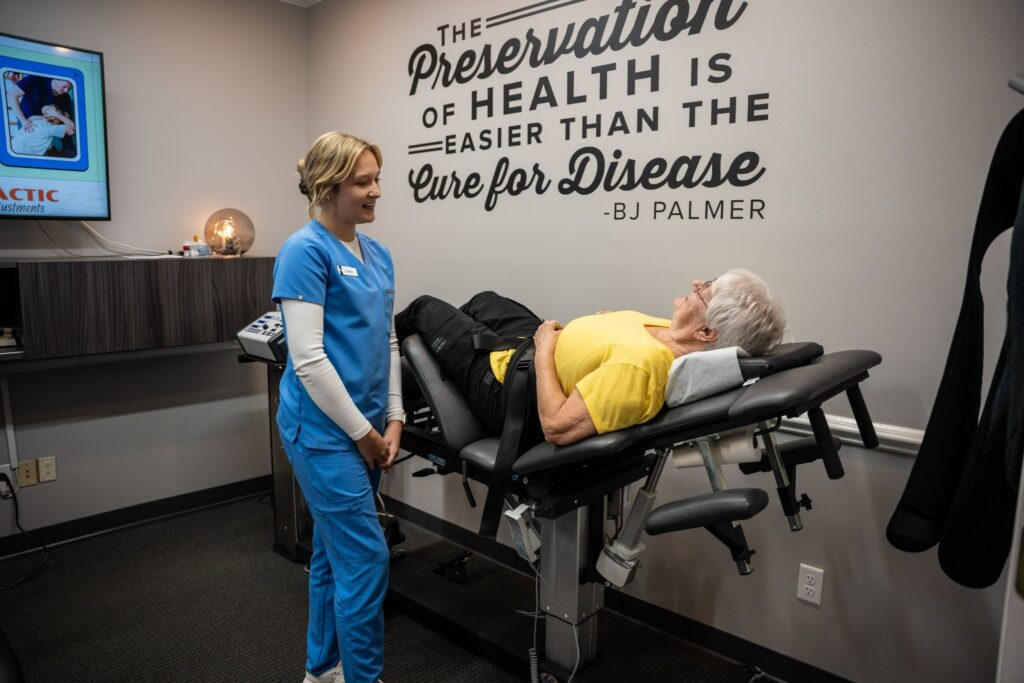
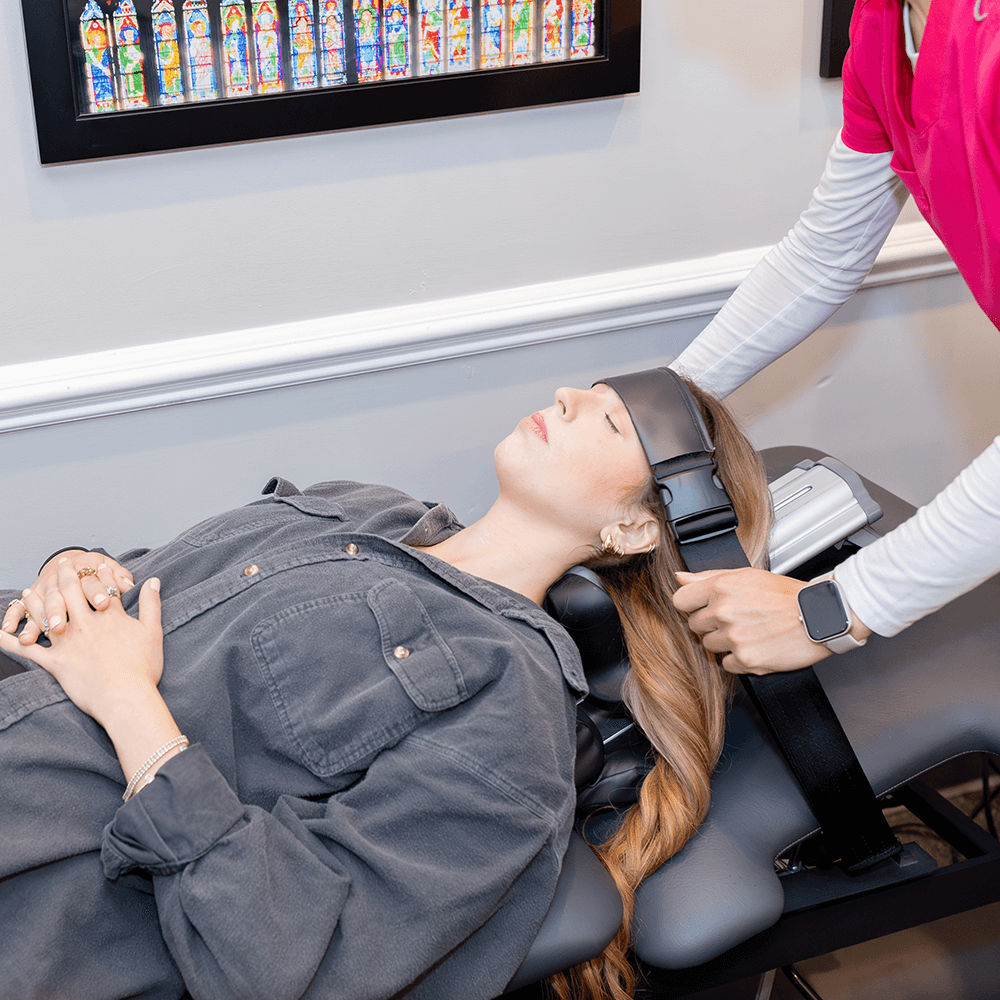
Chiropractic care offers a conservative, non-surgical approach to managing degenerative disc disease. At The Mauldin Clinic, we focus on optimizing spinal function, reducing pain, and helping patients maintain the activities they value without relying on medication or invasive procedures.
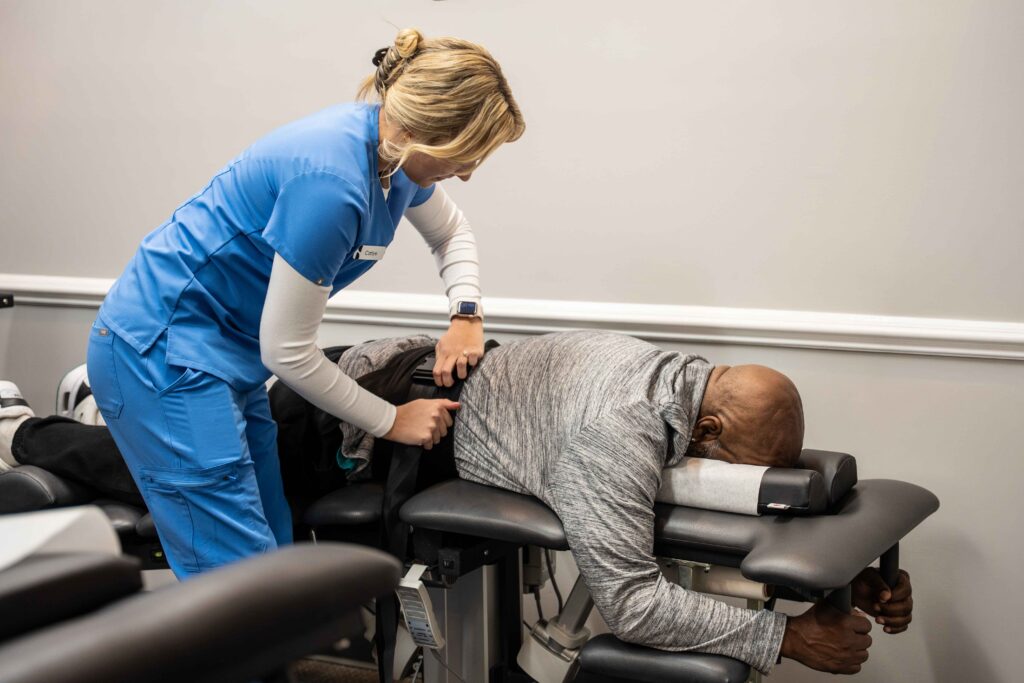
Spinal adjustments address joint restriction and alignment issues that often accompany disc degeneration. When vertebrae aren’t moving properly, it creates additional stress on surrounding tissues. Gentle, specific adjustments can restore better motion patterns, reduce compensatory stress, and improve overall spinal mechanics.
Our approach is always individualized. We don’t use the same techniques for everyone. For degenerative disc disease, we typically employ low-force methods that avoid excessive pressure on compromised discs while still providing therapeutic benefit. The goal is to improve function and reduce pain, not to reverse structural changes that have developed over years.
Soft tissue therapies complement adjustments. We may use massage, myofascial release, or instrument-assisted techniques to address muscle tension, trigger points, and fascial restrictions that contribute to your symptoms. Relaxing tight muscles and improving tissue quality helps reduce pain and supports better movement patterns.
Therapeutic exercises form a crucial part of care. We provide specific strengthening and stabilization exercises tailored to your condition. Building core strength, improving hip mobility, and addressing muscle imbalances takes pressure off degenerating discs and helps prevent future problems.
Posture and ergonomic counseling helps you modify daily activities that aggravate your spine. Small changes in how you sit, lift, sleep, and move can significantly impact your comfort level. We work with you to identify problem areas and implement practical solutions.
Education empowers you to manage your condition long-term. Understanding what triggers your symptoms, which activities to modify, and how to care for your spine daily gives you control over your health outcomes.
A typical care plan at The Mauldin Clinic starts with thorough evaluation including health history, orthopedic and neurological testing, and often imaging review if you have recent films. We then develop a treatment plan that might include twice-weekly visits initially, gradually reducing frequency as you improve and gain self-management skills.
Prevention Strategies That Actually Work
While you can’t completely prevent the natural aging process, you can significantly slow disc degeneration and reduce your risk of developing painful symptoms. These evidence-based strategies make a real difference.
Maintain consistent physical activity. Regular movement keeps discs healthy by promoting nutrient exchange. Discs don’t have direct blood supply, so they rely on movement to pump nutrients in and waste out. Walking, swimming, cycling, and yoga are excellent choices that don’t excessively stress the spine.
Build and maintain core strength. Your core muscles—including abdominals, back muscles, hip muscles, and pelvic floor—provide critical spinal support. Strong, balanced core muscles reduce the load on your discs during all activities. Planks, bird dogs, dead bugs, and bridges are effective exercises when performed with proper form.
Practice proper lifting mechanics. Always bend at your hips and knees, keep loads close to your body, avoid twisting while holding weight, and don’t hesitate to ask for help with heavy or awkward items. Many disc injuries occur during seemingly routine lifting tasks.
Optimize your workstation ergonomics. If you sit for work, ensure your chair supports your lower back, your feet rest flat on the floor, your monitor sits at eye level, and you take regular movement breaks. We see many office workers in Mauldin who develop or worsen disc symptoms due to poor desk setup.
Stay hydrated. Discs need water to maintain their cushioning properties. Adequate hydration throughout the day supports disc health, though the discs’ ability to retain water does decrease with age regardless of intake.
Manage your weight. Maintaining a healthy body weight reduces mechanical stress on spinal discs. Even modest weight loss can significantly decrease disc loading, particularly in the lumbar spine.
Quit smoking if you smoke. This single change can dramatically improve disc health and healing capacity. Smoking cessation benefits extend throughout your entire body, but the spine sees particular advantage.
Address injuries promptly. If you experience acute back pain from injury, seek appropriate care rather than hoping it resolves on its own. Early intervention can prevent minor problems from becoming chronic conditions.
Daily Management and Lifestyle Modifications
Living well with degenerative disc disease requires thoughtful daily habits. These practical strategies help minimize symptoms and maintain function.
Start your day with gentle movement. A few minutes of easy stretching or walking helps your spine transition from rest to activity. Your discs absorb fluid overnight, making them more vulnerable to injury first thing in the morning. Gradual warm-up protects against strain.
Alternate positions frequently throughout the day. Prolonged static postures, whether sitting or standing, stress the spine. Set a timer to remind yourself to change position every 30 to 45 minutes. Stand up, walk briefly, or perform simple stretches.
Use heat and cold strategically. Ice works well for acute flare-ups or after activities that aggravate your symptoms. Heat helps with chronic muscle tension and stiffness. Many patients find that alternating heat and cold provides the best relief.
Modify aggravating activities rather than avoiding them entirely. If you love gardening but bending causes pain, try raised beds or use a garden stool. If you enjoy golf but experience flare-ups afterward, focus on proper warm-up, technique refinement, and post-round stretching.
Prioritize sleep quality and position. Your mattress should provide support without excessive sinking. Side sleepers benefit from a pillow between the knees. Back sleepers may find relief with a pillow under the knees. Replace old mattresses that have lost support.
Manage stress effectively. Chronic stress increases muscle tension and can amplify pain perception. Regular relaxation practices, whether meditation, deep breathing, gentle yoga, or time in nature, support overall spine health.
Stay consistent with your exercise program. The strengthening and stretching exercises prescribed by your chiropractor work best when performed regularly. Even 10 to 15 minutes daily provides more benefit than hour-long sessions once weekly.
Plan ahead for demanding activities. If you know you’ll be traveling, doing yard work, or engaging in activities that typically aggravate your back, prepare with proper warm-up, take frequent breaks, and don’t push through significant pain.
When to See a Chiropractor
Knowing when to seek professional care helps you address problems before they become severe. Consider scheduling an evaluation at The Mauldin Clinic if you experience any of these situations.
Persistent pain lasting more than a few days without improvement warrants assessment. While occasional minor aches are normal, pain that doesn’t resolve with rest and basic self-care may indicate a problem requiring professional attention.
Pain that progressively worsens over days or weeks suggests an issue that won’t resolve on its own. Don’t wait until pain becomes unbearable. Earlier intervention typically leads to faster, more complete recovery.
Radiating pain into your arms or legs, particularly if accompanied by numbness, tingling, or weakness, indicates possible nerve involvement. These symptoms deserve prompt evaluation to prevent progression.
Difficulty performing daily activities signals that your condition is significantly impacting function. If you’re struggling with routine tasks like getting dressed, walking, or working, professional care can help restore your abilities.
Frequent recurring episodes suggest an underlying instability or biomechanical problem. If you experience repeated flare-ups, comprehensive evaluation can identify contributing factors and develop a prevention strategy.
However, certain symptoms require immediate medical attention rather than chiropractic care. Seek emergency evaluation for loss of bowel or bladder control, progressive weakness in the legs, numbness in the groin or inner thigh area, severe pain following significant trauma, or fever accompanying back pain. These red flags may indicate serious conditions requiring medical intervention.
For most degenerative disc symptoms, chiropractic care provides an excellent first-line approach. At The Mauldin Clinic, we thoroughly evaluate each patient and refer to medical specialists when appropriate. Your safety and best outcome are always our priority.
Treatment Approaches for Degenerative Disc Disease
| Treatment Type | Best For | Typical Duration | Key Benefits |
|---|---|---|---|
| Chiropractic Care | Mild to moderate symptoms, mechanical pain, joint restriction | 4-12 weeks initially, then periodic maintenance | Non-invasive, drug-free, improves function, addresses biomechanics |
| Physical Therapy | Weakness, instability, post-surgical rehabilitation | 6-12 weeks of structured sessions | Targeted strengthening, functional restoration, movement retraining |
| Medication | Acute flare-ups, inflammation management | Short-term use during severe episodes | Quick symptom relief, reduces inflammation |
| Lifestyle Modification | Everyone with disc degeneration | Ongoing, permanent changes | Prevention, symptom control, long-term health |
| Surgery | Severe nerve compression, failed conservative care, progressive neurological deficits | Recovery 3-12 months depending on procedure | Addresses structural problems, relieves severe compression |
Myths vs. Facts About Degenerative Disc Disease
Myth: Degenerative disc disease means your spine is crumbling and you’ll end up disabled
Fact: Despite the dramatic name, degenerative disc disease is a normal aging process that most people experience to some degree. Many people with significant disc changes on imaging have minimal or no symptoms. With proper management, the vast majority of people maintain active, functional lives without disability.
Myth: Once you have degenerative disc disease, you can never exercise or be active again
Fact: Regular appropriate exercise is actually one of the best treatments for degenerative disc disease. Movement promotes disc nutrition, strengthens supporting muscles, and often reduces pain. The key is choosing activities that don’t excessively stress your spine and building up gradually. Many patients at The Mauldin Clinic remain very active with proper guidance.
Myth: Chiropractic adjustments will make degenerative discs worse
Fact: When performed appropriately by a trained chiropractor, adjustments are safe and beneficial for most people with degenerative disc disease. We modify our techniques based on your specific condition, using gentle methods that improve joint function without stressing compromised discs. Evidence indicates that chiropractic care can effectively reduce pain and improve function for many disc conditions.
Myth: Surgery is inevitable if you have degenerative disc disease
Fact: The vast majority of people with degenerative disc disease never require surgery. Conservative approaches including chiropractic care, exercise, and lifestyle modification successfully manage symptoms for most patients. Surgery is typically reserved for cases with severe nerve compression, progressive neurological deficits, or symptoms that don’t respond to comprehensive conservative care.
Myth: You should rest in bed until degenerative disc pain goes away
Fact: Prolonged bed rest actually worsens outcomes for most back pain conditions. While brief rest during severe flare-ups may be necessary, returning to gentle activity as soon as possible promotes better healing and prevents deconditioning. Movement is medicine for your discs.
Final Thoughts from The Mauldin Clinic
Living with degenerative disc disease doesn’t mean accepting a future of pain and limitation. Here in Mauldin, we work with patients every day who have learned to effectively manage their disc conditions and maintain the activities they love. The key is understanding that while you can’t turn back the clock on structural changes, you have tremendous power over how those changes affect your life.
At The Mauldin Clinic, Dr. Mauldin and our team are committed to providing comprehensive, individualized care that addresses not just your symptoms but the underlying biomechanical and lifestyle factors contributing to your condition. We believe in empowering patients with education, practical strategies, and hands-on treatment that makes a real difference.
If you’re dealing with back pain or have been diagnosed with degenerative disc disease, you don’t have to navigate this alone. Our approach combines evidence-based chiropractic care with exercise prescription, ergonomic guidance, and lifestyle counseling to help you feel better and function optimally. We’re here in the Mauldin community, ready to partner with you on your journey to better spine health.
Remember, degenerative disc disease is manageable. With the right approach, most people continue living active, fulfilling lives. Your spine has supported you for years, and with proper care, it will continue serving you well into the future.
Frequently Asked Questions
Can degenerative disc disease be reversed or cured?
The structural changes of disc degeneration cannot be fully reversed, as they represent natural wear over time. However, symptoms can absolutely be managed effectively, and progression can be slowed significantly through appropriate care and lifestyle modifications. Many people experience substantial improvement in pain and function even though the underlying disc changes remain.
How long does it take to see improvement with chiropractic care for degenerative disc disease?
Most patients begin noticing some improvement within two to four weeks of starting care, though this varies based on severity, duration of symptoms, and individual factors. Significant functional improvement typically occurs over six to twelve weeks. Long-term management focuses on maintaining improvements and preventing flare-ups through periodic care and self-management strategies.
Will my degenerative disc disease continue to get worse over time?
Not necessarily. While some continued degeneration is normal with aging, many people stabilize and don’t experience progressive worsening, especially when they actively manage their condition. Maintaining strength, mobility, healthy weight, and good biomechanics can significantly slow progression and may prevent symptoms from developing even as structural changes continue at a normal pace.
Is it safe to exercise with degenerative disc disease?
Yes, exercise is not only safe but beneficial for most people with degenerative disc disease. The key is choosing appropriate activities and progressing gradually. Low-impact exercises like walking, swimming, cycling, and specific strengthening exercises are excellent choices. Avoid high-impact activities or movements that involve excessive twisting, bending, or compression until you’ve built adequate strength and stability.
Can I prevent my children from developing degenerative disc disease?
While genetics play a role and you can’t prevent all degenerative changes, you can certainly help your children develop habits that promote long-term spine health. Encourage regular physical activity, teach proper lifting mechanics, promote good posture, ensure they maintain a healthy weight, and help them avoid smoking. These factors significantly influence disc health over a lifetime.
Do I need an MRI to be treated for degenerative disc disease?
Not always. Many patients can be effectively evaluated and treated based on clinical examination without imaging. At The Mauldin Clinic, we order imaging when necessary—such as when symptoms suggest significant nerve compression, when there’s a history of trauma, or when symptoms don’t respond appropriately to initial care. We avoid unnecessary imaging while ensuring we have the information needed for safe, effective treatment.
TL;DR – Key Takeaways
- Degenerative disc disease is a common age-related condition, not a progressive disease, and most people can manage it effectively without surgery through conservative care
- Chiropractic care, exercise, and lifestyle modifications form the foundation of successful management, addressing both symptoms and underlying biomechanical contributors
- Staying active, maintaining core strength, managing weight, and practicing good ergonomics significantly reduce symptoms and slow progression
- Most people see improvement within weeks of starting comprehensive care, though long-term management requires ongoing self-care and periodic professional support
- Red flag symptoms requiring immediate medical attention include loss of bowel/bladder control, progressive leg weakness, or severe pain after trauma—but these are rare