
Leg pain is one of those issues that can quietly take over your daily life. It might start as a dull ache after a long day on your feet, or it might show up suddenly as a sharp, shooting sensation that runs from your lower back all the way down to your foot. Either way, it gets your attention fast. Here in Mauldin, SC, many patients come through the doors of The Mauldin Clinic looking for answers — and more importantly, relief. If you’ve been struggling with leg pain and wondering whether chiropractic care might help, this article is written just for you.
What Does Chiropractic Care Have to Do With Leg Pain?
Chiropractic care focuses on the relationship between your spine, nervous system, and the rest of your body. Because many types of leg pain originate from nerve compression or spinal misalignment, chiropractic treatment can be a highly relevant and effective non-surgical option for addressing the root cause — not just the symptom.
- What Causes Leg Pain?
- The Spine-Leg Connection You Might Not Know About
- Common Types of Leg Pain Chiropractors See
- How Chiropractic Care Fits Into Your Recovery
- Practical Tips for Managing Leg Pain at Home
- When to See a Chiropractor for Leg Pain
- Treatment Approaches for Leg Pain
- Myths vs. Facts About Chiropractic Care and Leg Pain
- Final Thoughts From The Mauldin Clinic
What Causes Leg Pain?
Leg pain has many potential sources, and understanding where yours is coming from is the first step toward real relief. Some leg pain originates directly in the leg itself — think muscle strains, joint inflammation, or circulatory issues. But a significant portion of leg pain actually begins in the spine, even though it feels like it’s happening far from your back.
The lumbar spine, which is the lower portion of your back, houses a network of nerve roots that travel all the way down through your hips, thighs, calves, and feet. When any one of those nerves becomes irritated, compressed, or pinched, the pain signal can travel along the entire nerve pathway. This is called referred pain or radiculopathy, and it’s remarkably common.
Other contributing factors to leg pain include poor posture, prolonged sitting, excess body weight, muscle imbalances, and repetitive stress from work or athletic activity. Here in Mauldin, SC, we see a wide variety of patients — from desk workers who sit for hours at a time to active individuals who push their bodies hard on weekends. The causes can be different, but the discomfort is equally real across the board.
The Spine-Leg Connection You Might Not Know About
This is one of the most important concepts to understand when it comes to leg pain, and it’s something Dr. Matt Eiken discusses frequently with patients at The Mauldin Clinic. Your spine is not just a structural support column — it is the highway through which your entire nervous system communicates with your body.
The lumbar and sacral nerve roots — the ones that exit the lower spine and sacrum — are directly responsible for sensation and movement in your legs. When a vertebra shifts out of its optimal position (what chiropractors call a subluxation), or when a spinal disc becomes compressed or herniated, these nerve roots can become irritated. The result can be pain, tingling, numbness, or weakness anywhere along the leg.
The sciatic nerve is probably the most well-known example of this. It is the longest nerve in the human body, running from the lower back through the buttock and down each leg. Sciatica — the term for pain along this nerve — is one of the most frequent complaints that brings patients to a chiropractic office. But sciatic nerve pain is just one example. Femoral nerve irritation, for instance, can cause pain at the front of the thigh, and sacroiliac joint dysfunction can produce deep, aching discomfort in the hip and upper leg region.
Understanding this connection is why chiropractors evaluate your spine even when your primary complaint is leg pain. Treating the source — rather than just masking the symptom — is a cornerstone of what makes chiropractic care different.
Common Types of Leg Pain Chiropractors See
At The Mauldin Clinic in Mauldin, SC, Dr. Matt Eiken evaluates patients dealing with a range of leg pain presentations. Here are some of the most common ones:
Sciatica: This is characterized by a sharp, burning, or shooting pain that travels from the lower back or buttock down through one leg. It can also include tingling or numbness. Sciatica is often triggered by a herniated disc, bone spur, or piriformis muscle tightness compressing the sciatic nerve.
Hip and Thigh Pain: This type of pain can stem from sacroiliac joint dysfunction or lumbar nerve root compression. It often feels like a deep ache in the outer or front portion of the hip and thigh, and patients sometimes mistake it for a hip problem when the spine is actually involved.
Knee Pain with a Spinal Component: Not all knee pain comes from a knee injury. In some cases, altered gait mechanics caused by spinal misalignment or muscle imbalances put uneven stress on the knee joint. Addressing the underlying biomechanical dysfunction can make a meaningful difference in how the knee feels.
Calf Pain and Lower Leg Tension: Nerve compression in the lumbar region can cause cramping, tightness, or aching sensations in the calf and lower leg. This is sometimes confused with circulation-related pain (known as claudication), so proper evaluation is important to distinguish between the two.
Numbness and Tingling in the Feet: Patients who experience pins-and-needles sensations in their feet often have nerve involvement originating higher up in the lumbar or sacral spine. This symptom deserves careful attention and a thorough evaluation.
How Chiropractic Care Fits Into Your Recovery
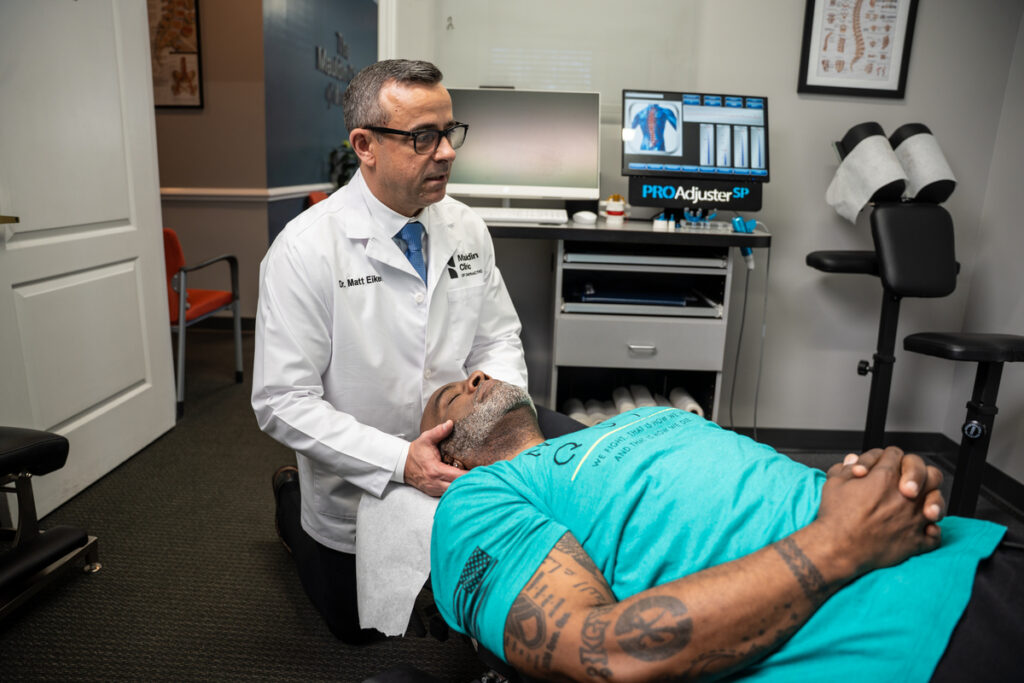
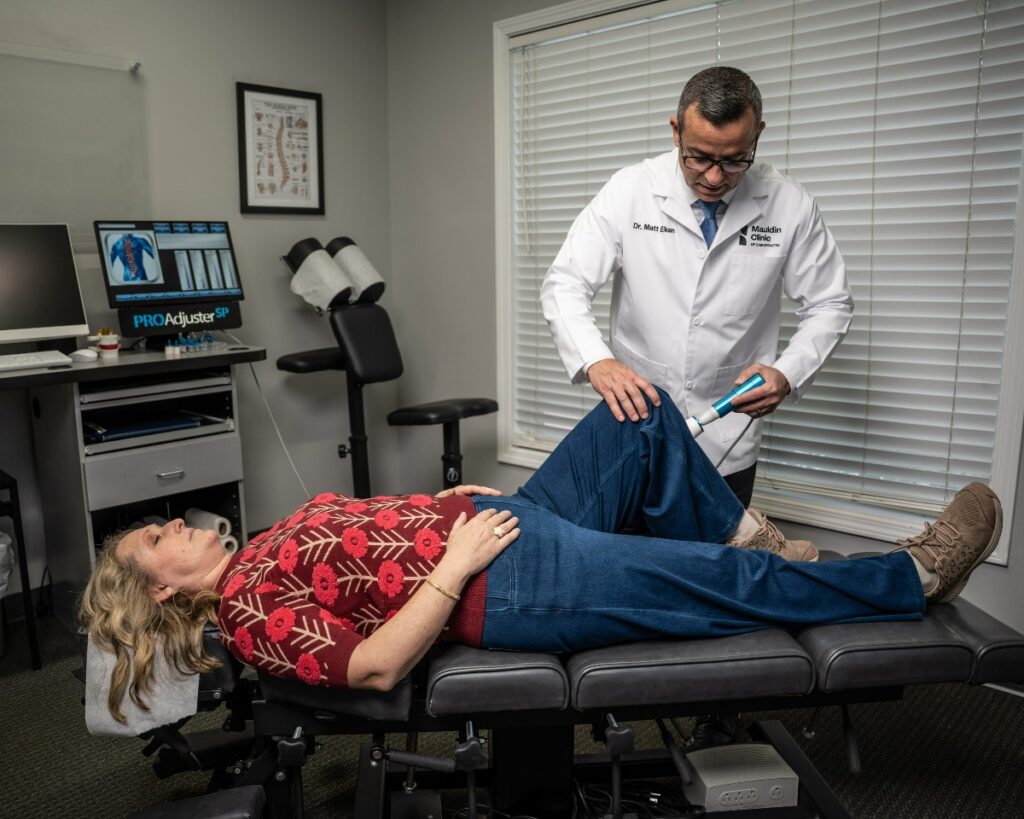
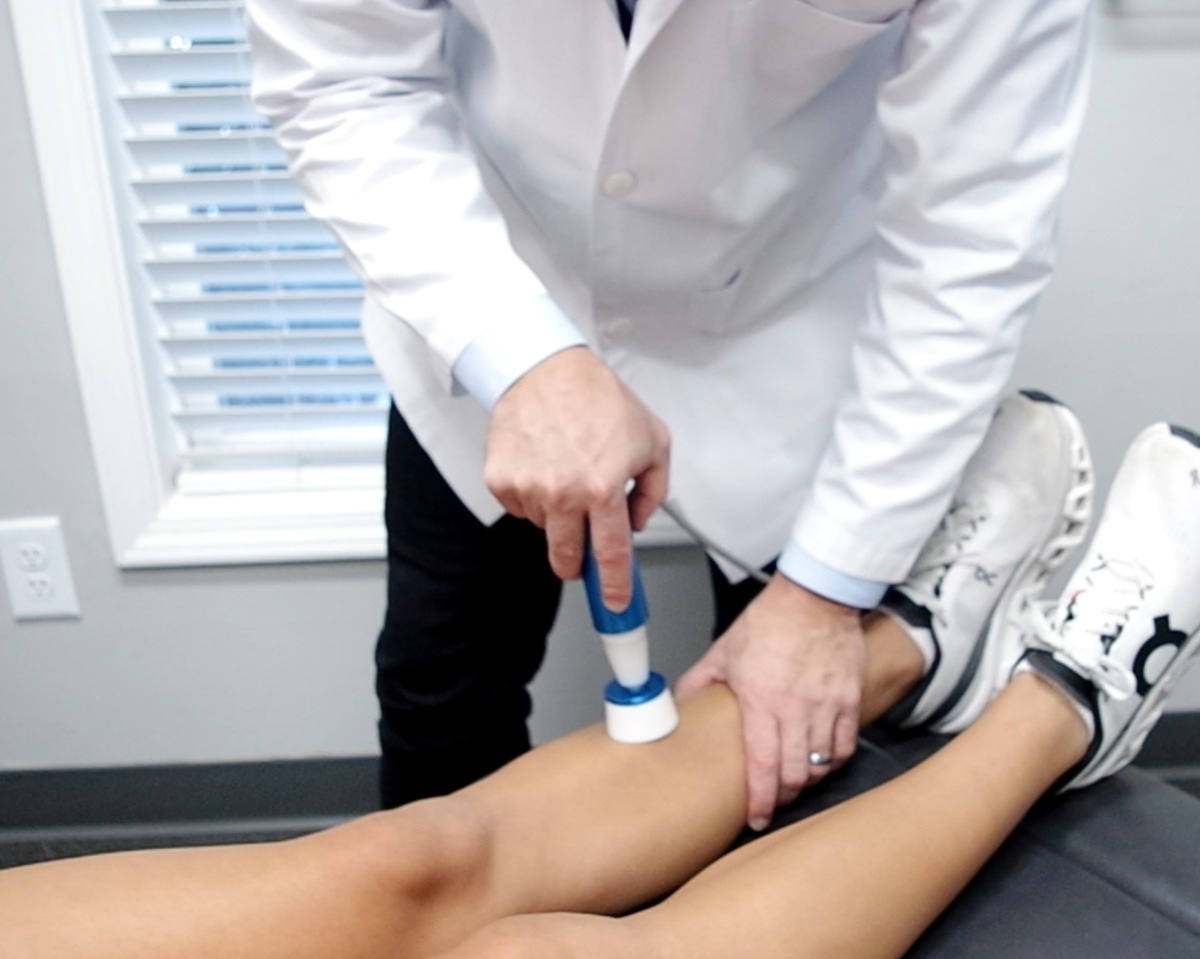
Chiropractic care offers a non-invasive, drug-free approach to managing many types of leg pain, particularly when the underlying cause is related to the spine or musculoskeletal system. At The Mauldin Clinic, the approach begins with a thorough evaluation. Dr. Matt Eiken takes time to understand your symptoms, your history, and how the pain is affecting your day-to-day life before recommending any course of care.
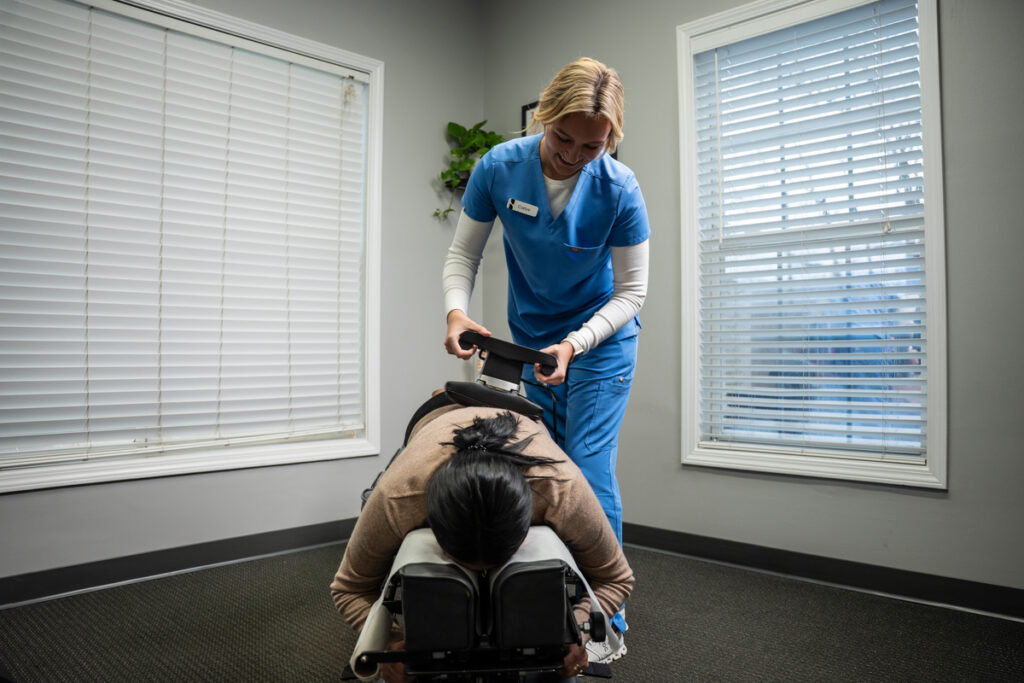
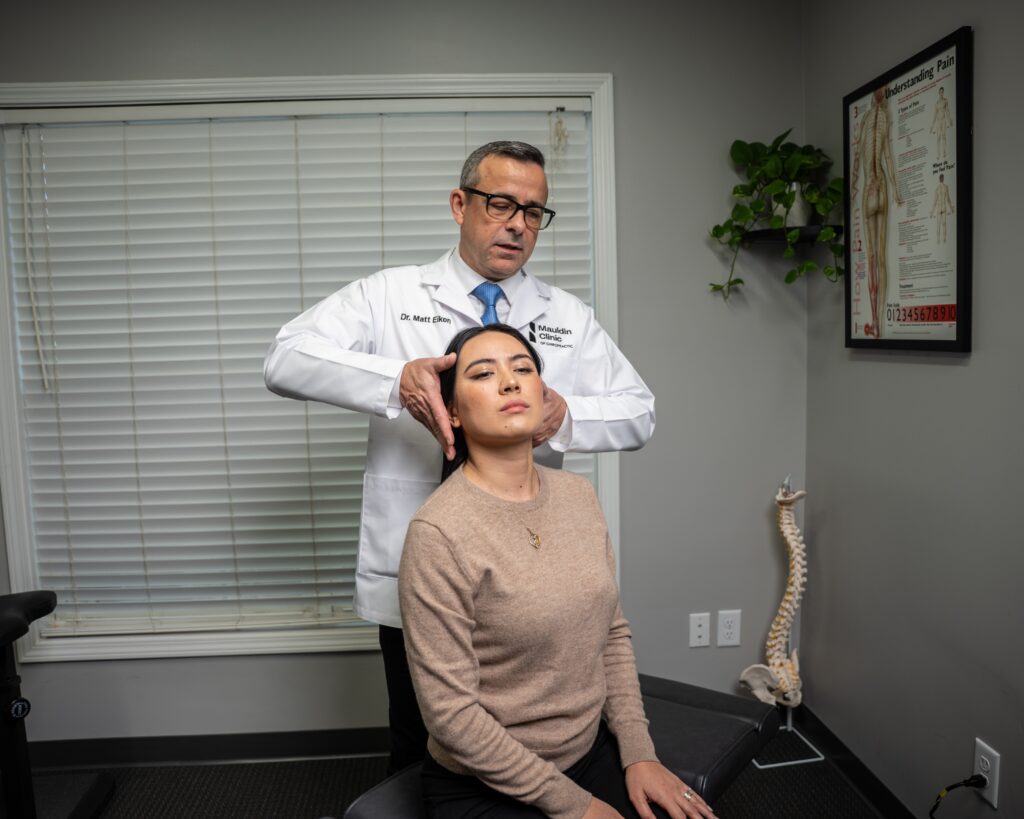
Spinal adjustments are the primary tool in chiropractic care. These controlled, precise movements are applied to specific spinal joints to restore proper alignment, reduce nerve irritation, and improve overall function. When a nerve root that was previously compressed gets even a small amount of relief from pressure, patients frequently notice a significant improvement in their leg symptoms.
In addition to spinal adjustments, care at The Mauldin Clinic may also involve soft tissue work to address muscle tightness, guidance on stretching and movement habits, and recommendations for postural improvements that reduce strain on the lower spine. The goal is always to address the cause of your pain, support your body’s natural healing processes, and help you get back to doing the things you enjoy — whether that’s taking a walk around Mauldin, playing with your kids, or simply sitting at work without discomfort.
Research published through organizations like the American Chiropractic Association and reviewed in sources such as the Cochrane Library suggests that spinal manipulation can be beneficial for patients with lower back pain and associated leg symptoms. While outcomes vary by individual, chiropractic care is widely recognized as a reasonable first-line conservative approach before considering more invasive interventions.
Practical Tips for Managing Leg Pain at Home
While professional care is often necessary to address the root cause of leg pain, there are practical steps you can take at home to support your recovery and reduce day-to-day discomfort. These suggestions are general in nature — always check with Dr. Matt Eiken or your healthcare provider before starting any new routine, especially if your pain is severe or worsening.
Mind your sitting posture. Prolonged sitting is one of the most common aggravating factors for lower back and leg pain. Try to sit with both feet flat on the floor, your knees at roughly a 90-degree angle, and your lower back supported. Avoid crossing your legs for extended periods, as this can compress the piriformis muscle and irritate the sciatic nerve.
Take regular movement breaks. If your job involves sitting for long hours, setting a timer to stand up and move around every 30 to 45 minutes can make a real difference. Even a short walk down the hallway gives your spinal discs a chance to re-hydrate and reduces nerve pressure.
Stretch your hip flexors and hamstrings gently. Tight hip flexors and hamstrings contribute to both lower back strain and leg tension. Gentle, controlled stretching — not aggressive or bouncing stretches — can help maintain flexibility and reduce muscular tension around the lumbar spine.
Pay attention to your sleeping position. Sleeping on your stomach can put significant stress on your lumbar spine. Sleeping on your side with a pillow between your knees, or on your back with a pillow under your knees, can help keep your spine in a more neutral position overnight.
Stay active within your comfort level. Rest can be helpful in the short term, but extended inactivity often makes things worse. Low-impact movement like walking, swimming, or gentle cycling keeps blood flowing and supports tissue recovery.
When to See a Chiropractor for Leg Pain
If your leg pain has lasted more than a few days without improvement, it is a good time to have it evaluated professionally. Leg pain that is mild and clearly related to overactivity might resolve on its own with rest and gentle movement, but pain that persists, worsens, or is accompanied by neurological symptoms deserves attention sooner rather than later.
You should consider scheduling a visit with Dr. Matt Eiken at The Mauldin Clinic if you experience any of the following: shooting or radiating pain that travels from your back or buttock down your leg, numbness or tingling in your leg or foot, leg weakness or difficulty walking, or leg pain that wakes you up at night.
There are also red flags that may require a medical referral rather than chiropractic care alone. These include loss of bladder or bowel control alongside leg pain (a potential sign of cauda equina syndrome, which is a medical emergency), severe and rapidly worsening neurological symptoms, or leg pain accompanied by significant unexplained weight loss, fever, or a history of cancer. In these cases, it is important to seek emergency or urgent medical care right away. A good chiropractor will always refer you to the appropriate provider when the situation calls for it.
Treatment Approaches for Leg Pain
| Approach | Method | Focus | Invasiveness | Best For |
|---|---|---|---|---|
| Chiropractic Care | Spinal adjustments, soft tissue therapy, movement guidance | Root cause — spinal alignment and nerve function | Non-invasive | Nerve-related leg pain, sciatica, biomechanical imbalances |
| Physical Therapy | Therapeutic exercise, stretching, strengthening | Muscle function and rehabilitation | Non-invasive | Muscle weakness, post-surgical recovery, mobility improvement |
| Pain Medication | Over-the-counter or prescription anti-inflammatories or analgesics | Symptom management | Non-invasive (oral) | Short-term pain relief while addressing underlying cause |
| Epidural Steroid Injection | Corticosteroid injected near spinal nerves | Reducing nerve inflammation | Minimally invasive | Moderate to severe nerve compression unresponsive to conservative care |
| Surgery | Discectomy, laminectomy, spinal fusion | Structural correction | Highly invasive | Severe cases when conservative care has failed |
Myths vs. Facts About Chiropractic Care and Leg Pain
Myth: Leg pain always means something is wrong with your leg.
Fact: A large percentage of leg pain is actually caused by nerve compression or spinal dysfunction in the lower back. The leg is where you feel the pain, but the source is often higher up. This is why a full spinal evaluation is an essential part of diagnosing leg pain accurately.
Myth: Chiropractic adjustments are dangerous or painful.
Fact: Spinal adjustments performed by a licensed, trained chiropractor are widely considered safe for most people. Some patients experience mild soreness after their first few adjustments, similar to how muscles feel after exercise, but serious adverse events from chiropractic care are rare. Dr. Matt Eiken performs a thorough evaluation before any treatment to ensure it is appropriate for your specific condition.
Myth: You have to live with leg pain if imaging shows no structural damage.
Fact: Many cases of significant leg pain and nerve irritation do not show up clearly on standard X-rays. Functional issues — like joint restriction, soft tissue tension, and muscle imbalances — can cause real symptoms without appearing on imaging. Chiropractic assessment evaluates movement, nerve function, and posture in ways that imaging cannot capture.
Myth: Chiropractic care is only a temporary fix.
Fact: While some patients use chiropractic care reactively when pain flares up, many find that consistent, proactive care helps maintain spinal health and prevents symptoms from returning. The goal at The Mauldin Clinic is not just to get you out of pain — it’s to help you understand and address the factors that contributed to your pain in the first place.
Myth: Surgery is the only real solution for sciatica.
Fact: Evidence indicates that most cases of sciatica respond well to conservative care, including chiropractic treatment, and do not require surgery. Surgery is generally considered only after conservative approaches have been tried and have not provided adequate relief. Starting with the least invasive option is usually the most sensible path forward.
Final Thoughts From The Mauldin Clinic
Living with leg pain is exhausting, frustrating, and limiting — but it doesn’t have to be your permanent reality. Understanding that many forms of leg pain have a spinal or neurological component opens up a whole new set of options for getting real, lasting relief without jumping straight to medication or surgery.
At The Mauldin Clinic, right here in Mauldin, SC, Dr. Matt Eiken is committed to helping patients understand what is happening in their bodies and offering genuine, evidence-informed care that addresses the root cause of their pain. Whether you’ve been dealing with sciatica for months, woke up one morning with a shooting pain down your leg, or have had nagging lower leg discomfort that just won’t quit, you deserve a thorough evaluation and a clear path forward.
We believe that the Mauldin community deserves access to quality conservative care that puts the patient first. If leg pain has been slowing you down, we’d be glad to sit down with you, listen carefully to your story, and work through a plan that makes sense for your life. You don’t have to figure this out alone.
Frequently Asked Questions
Can a chiropractor really help with sciatic nerve pain?
Yes, chiropractic care is one of the most commonly recommended conservative approaches for sciatica. Spinal adjustments can help reduce pressure on the sciatic nerve, and research suggests that many patients with sciatica experience meaningful improvement with chiropractic treatment. Individual results vary, and a thorough evaluation is necessary to determine whether chiropractic care is appropriate for your specific case.
How many chiropractic visits will it take to relieve my leg pain?
This depends on the cause and severity of your leg pain, as well as how long it has been present. Some patients notice improvement relatively quickly, while others with more chronic or complex conditions require a longer course of care. Dr. Matt Eiken will provide you with a realistic assessment after your initial evaluation.
Is it safe to get a chiropractic adjustment if I have a herniated disc?
In many cases, yes — but it depends on the specifics of your condition. Certain chiropractic techniques are specifically designed to gently decompress spinal segments and are commonly used for disc-related issues. A proper examination, including a review of any imaging you have, helps determine the safest and most effective approach for your situation.
What is the difference between leg pain from a muscle strain and nerve-related leg pain?
Muscle strain typically produces localized aching or soreness that is aggravated by direct activity and improves with rest. Nerve-related leg pain often travels along a specific path, can include burning, shooting, or electric sensations, and may be accompanied by numbness or tingling. A chiropractor can help differentiate between the two through a clinical examination.
Should I wait to see if my leg pain goes away on its own before visiting a chiropractor?
Mild leg pain from a known cause — like overdoing it at the gym — often resolves within a few days with rest. However, if your pain is persistent, worsening, or accompanied by neurological symptoms like numbness or weakness, it is wise to have it evaluated sooner rather than later. Early intervention often leads to better outcomes.
Does The Mauldin Clinic treat leg pain in patients of all ages?
Chiropractic care can be adapted for patients across a wide range of ages and health conditions. Dr. Matt Eiken takes a personalized approach with every patient to ensure the care provided is appropriate for their age, health history, and specific symptoms. Whether you’re a young athlete or a retiree, leg pain deserves proper attention and care.
TL;DR — Key Takeaways
- Many types of leg pain originate in the spine, not the leg itself, making chiropractic care a highly relevant treatment option.
- Common nerve-related leg conditions like sciatica, hip pain, and lower leg numbness often respond well to spinal adjustments and conservative chiropractic care.
- Dr. Matt Eiken at The Mauldin Clinic in Mauldin, SC takes a thorough, individualized approach to identifying the source of leg pain and creating a care plan that addresses the root cause.
- Simple at-home habits — like improving posture, taking movement breaks, and stretching gently — can support your recovery between visits.
- If your leg pain is persistent, worsening, or accompanied by numbness or weakness, don’t wait — schedule a professional evaluation sooner rather than later.