
If you spend most of your day sitting at a desk, you are far from alone. Millions of Americans work in office environments, and many spend upwards of eight to ten hours each day seated. What might surprise you is just how significantly that sedentary lifestyle can affect your body — from your neck and lower back all the way down to your cardiovascular health. Here in Mauldin, SC, patients at The Mauldin Clinic regularly come in describing the same familiar aches: stiff necks, tight hips, nagging lower back pain, and a general sense of tension that just won’t go away. The good news is that understanding the problem is the first step toward solving it, and there is a great deal you can do to protect your health even if your job requires long hours at a desk.
What Is the “Sitting Epidemic”?
The term “sitting epidemic” refers to the growing public health concern surrounding prolonged, habitual sitting and its cumulative effects on the human body. Modern desk work has created a lifestyle that our bodies were never designed for — extended periods of static posture that strain muscles, compress spinal discs, and reduce circulation throughout the body.
Why Prolonged Sitting Is Harmful
The human body was built for movement. Our muscles, joints, spinal discs, and circulatory systems all function best when we are active throughout the day. When you sit for extended periods, several important physiological processes begin to slow down or break down altogether.
First, the muscles that support your spine — particularly those in your core and glutes — become underactive when you are seated for hours at a time. Over weeks and months, these muscles weaken. When they are not doing their job, other structures like spinal discs, ligaments, and smaller supporting muscles have to pick up the slack. That imbalance is often the root cause of the chronic pain so many desk workers feel.
Second, prolonged sitting compresses the intervertebral discs in your lumbar spine. These discs act as shock absorbers between the bones of your spine, and they rely on movement to stay hydrated and healthy. When you are seated for long stretches without moving, those discs are under constant load without the benefit of the fluid exchange that movement provides. Over time, this can contribute to disc degeneration and increased vulnerability to injury.
Beyond the musculoskeletal system, research suggests that excessive sedentary behavior is associated with increased risks for metabolic conditions, cardiovascular concerns, and reduced overall energy levels. Organizations like the World Health Organization have highlighted physical inactivity as one of the leading modifiable risk factors for global health. This is not meant to alarm you — it is simply a reminder that the body thrives on movement, and small changes can make a big difference.
Common Symptoms Desk Workers Experience
Many people who spend long hours at a desk begin to notice symptoms gradually. It often starts as minor stiffness in the morning or mild tightness after a long workday. Over time, without intervention, these symptoms can become more persistent and harder to ignore.
Lower back pain is by far the most frequently reported complaint among desk workers. The lumbar region bears most of the body’s weight when seated, and when posture is poor or sitting time is excessive, the muscles and discs in this area are under continuous stress. Patients who visit Dr. Matt Eiken at The Mauldin Clinic in Mauldin, SC often describe a dull, nagging ache in the lower back that flares up after long work sessions.
Neck pain and upper back tension are also extremely common. When you hunch forward toward a screen — sometimes called “tech neck” or forward head posture — the weight of your head shifts forward, dramatically increasing the load on the cervical spine. For reference, the average human head weighs about ten to twelve pounds. Every inch it shifts forward effectively multiplies that load on the structures supporting it.
Hip flexor tightness is another very common issue. The hip flexors are a group of muscles that shorten when you remain in a seated position for extended periods. When they tighten chronically, they can tilt the pelvis forward, increase the arch in the lower back, and contribute to both hip and lower back discomfort. Headaches, wrist pain from repetitive keyboard use, and general fatigue are also symptoms frequently reported by office workers.
How Poor Posture Affects Your Spine
Your spine has three natural curves — the cervical (neck), thoracic (mid-back), and lumbar (lower back) curves — and they work together to distribute load efficiently across your body. Good posture preserves these curves. Poor posture distorts them, and the consequences build up over time.
When you slouch at your desk, the natural lumbar curve tends to flatten or even reverse. This places uneven stress on the spinal discs and the facet joints that link your vertebrae together. The thoracic spine tends to round excessively (a condition sometimes called kyphosis), and the neck often compensates by jutting forward. This chain reaction of postural changes is at the heart of many of the aches and pains desk workers experience.
What makes this particularly tricky is that the body adapts to the positions it is held in most frequently. If you spend eight or more hours a day in a poor postural position, your muscles, fascia, and connective tissue begin to adapt to that position as if it were normal. Muscles on one side of a joint become tight while the opposing muscles become lengthened and weakened. Chiropractors refer to this pattern as postural imbalance, and it is one of the primary issues Dr. Matt Eiken addresses with desk workers who come into The Mauldin Clinic.
Left unaddressed, these imbalances can contribute to more significant problems over time, including joint dysfunction, nerve irritation, and reduced range of motion. The encouraging news is that the spine is remarkably resilient, and with the right care and habits, most people can see meaningful improvement.
How Chiropractic Care Fits In
Chiropractic care offers a non-invasive, drug-free approach to addressing the musculoskeletal consequences of prolonged sitting. Rather than masking symptoms with medication, chiropractic focuses on identifying and correcting the underlying mechanical dysfunctions that are causing discomfort in the first place.
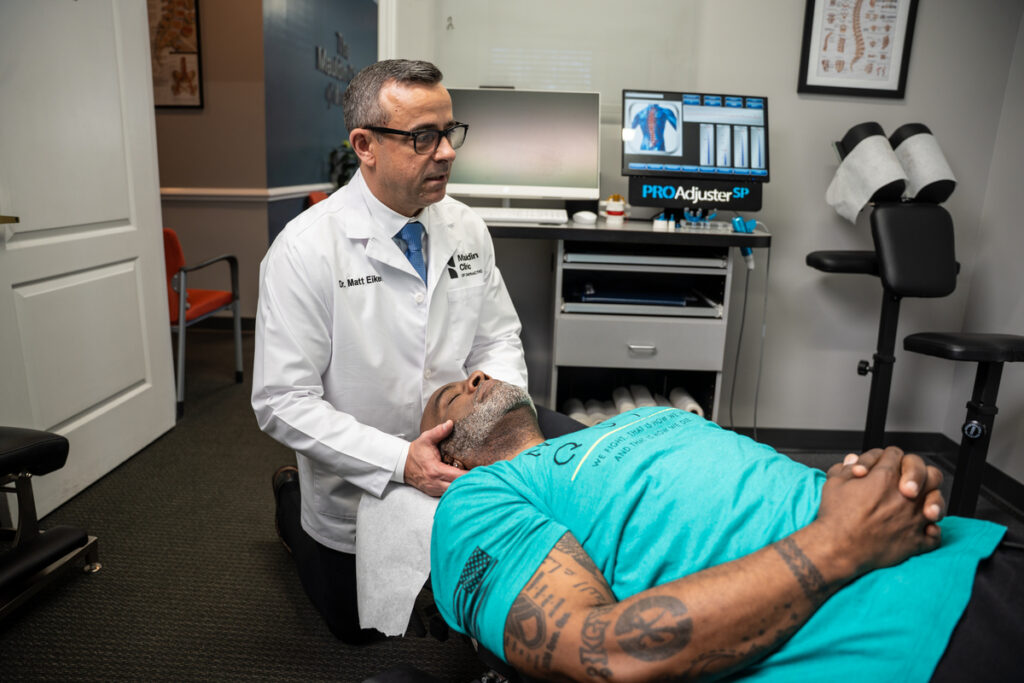
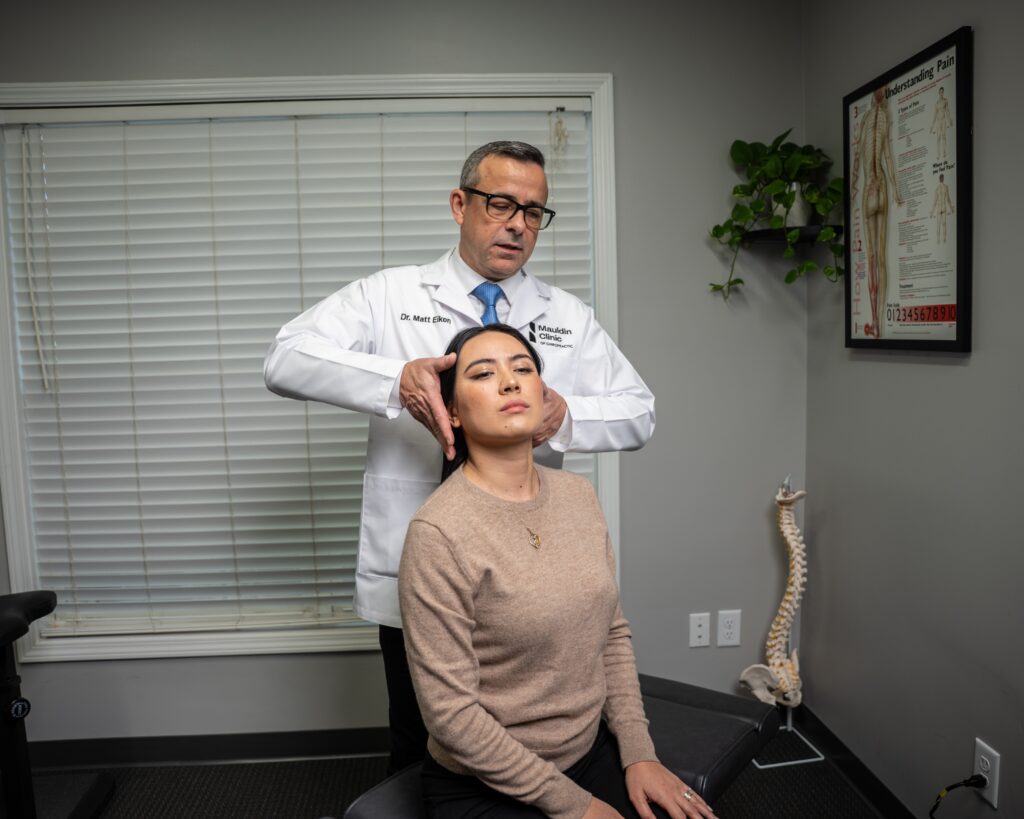
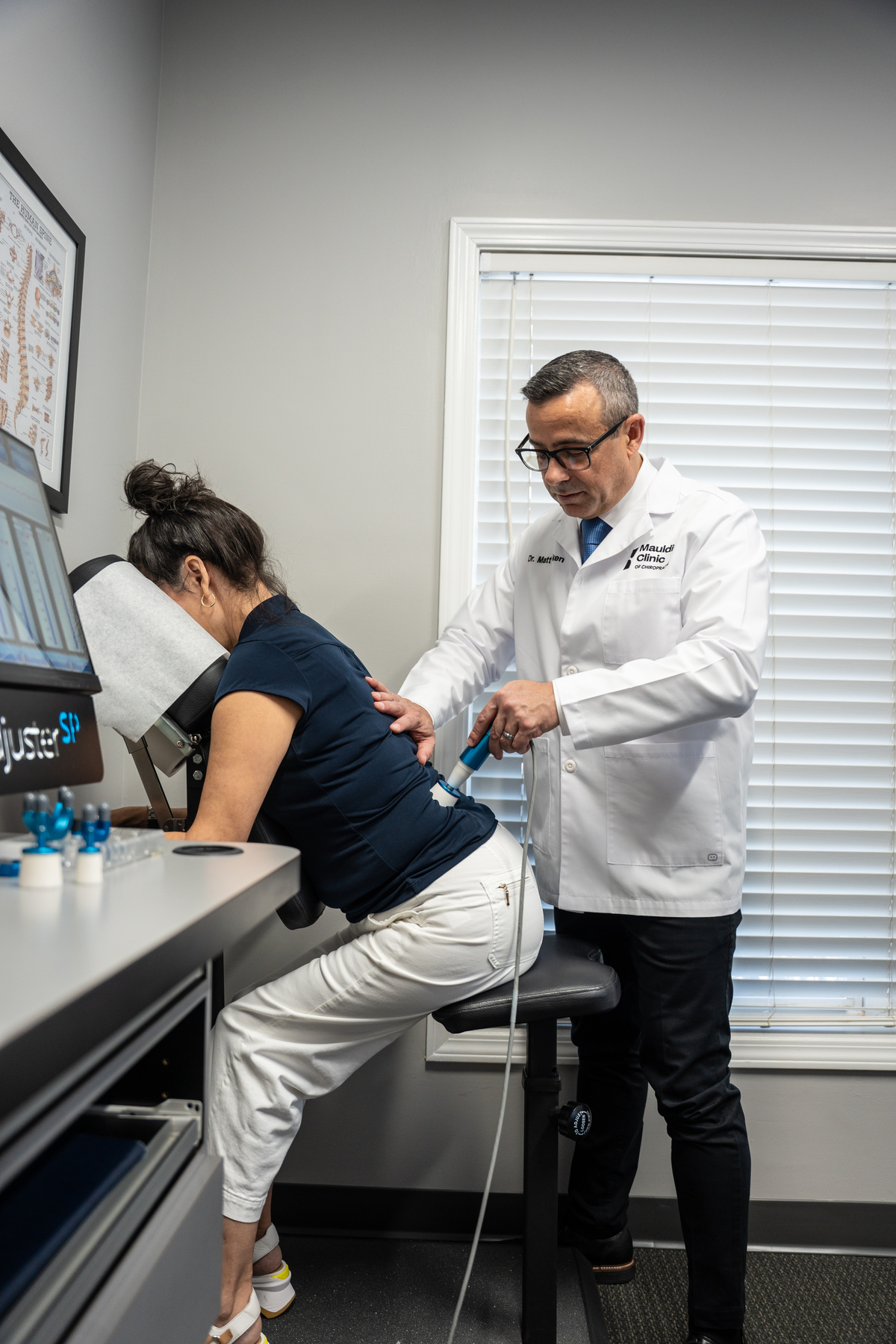
When you visit The Mauldin Clinic, Dr. Matt Eiken will conduct a thorough evaluation that includes a review of your posture, spinal alignment, joint mobility, and muscle function. This helps to pinpoint exactly where imbalances exist and what might be driving your symptoms. From there, a personalized care plan is developed to address your specific needs.
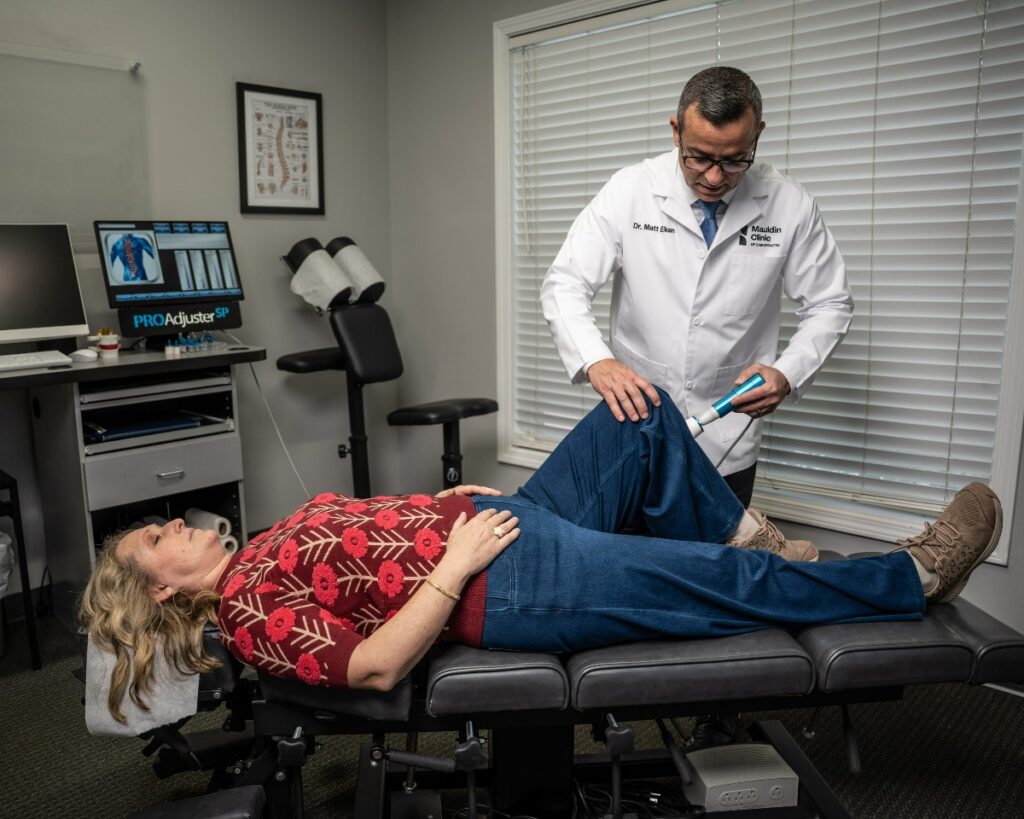
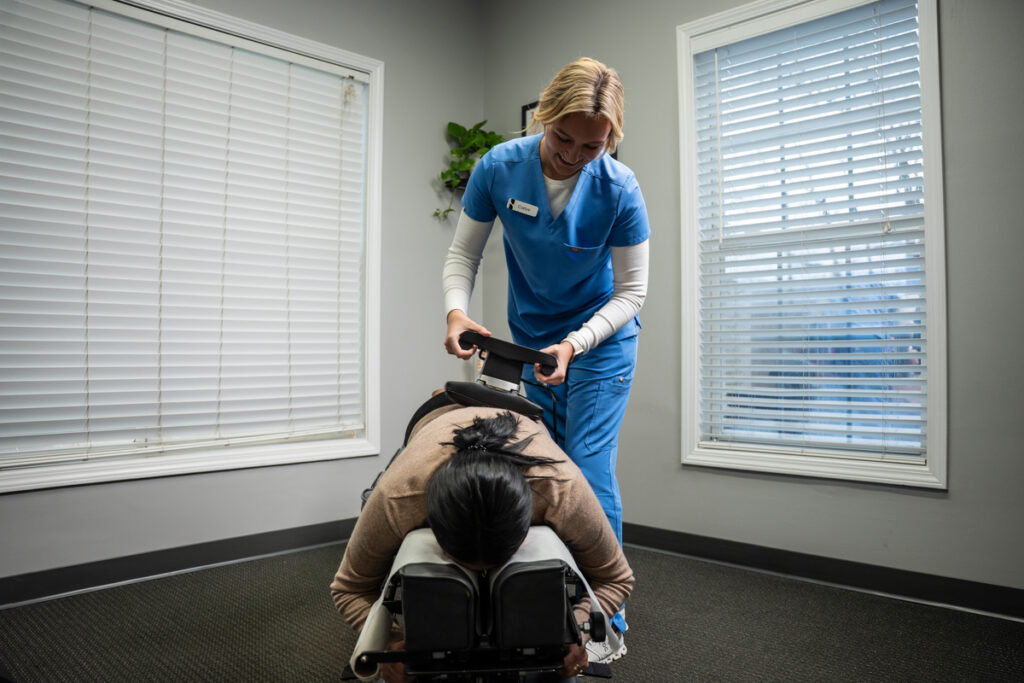
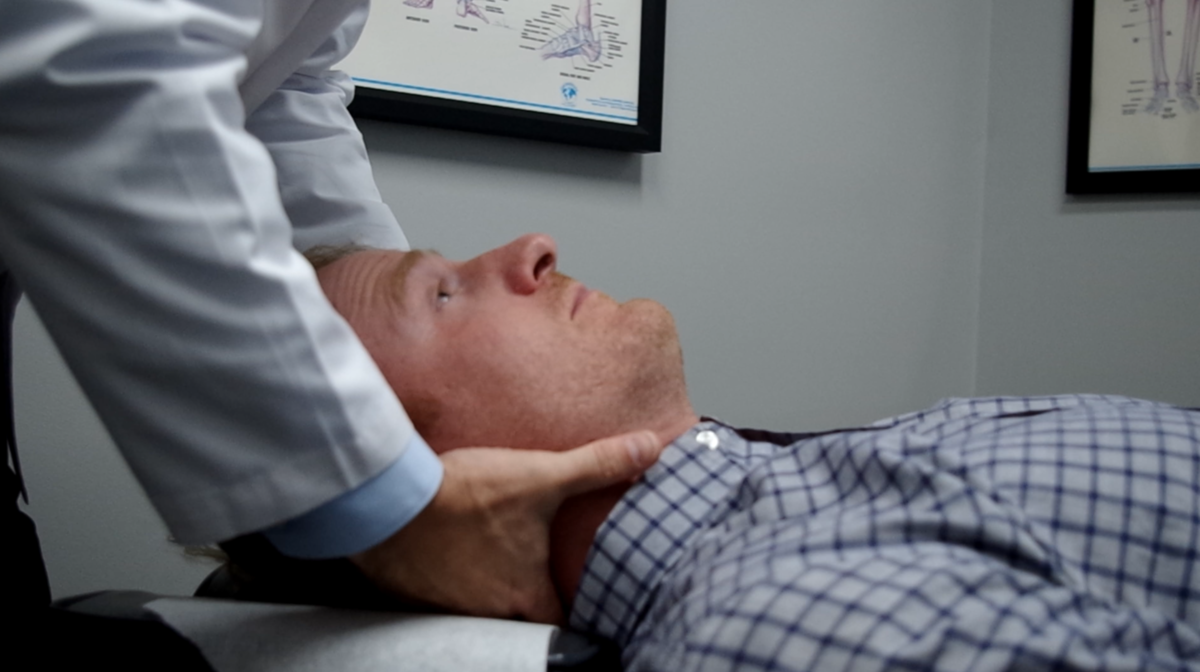
Spinal adjustments are a cornerstone of chiropractic care. When joints in the spine become restricted or misaligned — a condition chiropractors call a subluxation — movement becomes less fluid and the surrounding muscles and nerves can be affected. Gentle, precise adjustments help restore proper motion to these joints, which can relieve tension, reduce nerve irritation, and support the body’s natural ability to heal.
In addition to adjustments, chiropractic care for desk workers often includes soft tissue work to address tight muscles, postural retraining exercises, and guidance on ergonomic modifications. Evidence from organizations like the American Chiropractic Association and research published in peer-reviewed journals indicates that chiropractic care has been shown to help manage both acute and chronic neck and back pain — two of the most common issues affecting desk workers. The goal is always to help you feel better, move better, and develop the habits that keep you that way.
Practical Tips for Desk Workers
You do not need to quit your job or buy an expensive standing desk to start protecting your health. Many of the most effective strategies are simple, free, and easy to incorporate into your existing routine.
One of the most important things you can do is break up your sitting time regularly. Setting a timer to stand up, stretch, or take a short walk every thirty to forty-five minutes can significantly reduce the cumulative strain on your spine. Even a one or two minute movement break resets circulation, reduces muscle tension, and gives your spinal discs a chance to decompress. It does not take much — it just takes consistency.
Pay attention to your workstation setup. Your monitor should be at or just slightly below eye level so that your head is not constantly tilting down or craning upward. Your chair should support the natural curve of your lower back, and your feet should rest flat on the floor or on a footrest. Your elbows should be at roughly a ninety-degree angle when typing, and your wrists should be neutral — not flexed or extended.
Strengthening your core and glute muscles outside of work hours is also tremendously helpful. These muscles are the primary stabilizers of the pelvis and lower back, and keeping them strong gives your spine the active support it needs. Simple exercises like bridges, dead bugs, and bird dogs can be done at home with no equipment and make a real difference over time. If you are unsure where to start, the team at The Mauldin Clinic in Mauldin, SC can point you in the right direction.
When to See a Chiropractor
Many people wait until pain becomes severe before seeking help, but earlier is almost always better when it comes to musculoskeletal issues. If you have been experiencing persistent stiffness, tension, or discomfort related to your desk job — even if it feels manageable right now — that is a reasonable time to come in for an evaluation.
You should also seek care if you notice that your pain is beginning to affect your daily life: disrupting your sleep, limiting your ability to exercise or perform household tasks, or making it difficult to concentrate at work. Pain that radiates from the neck into the arms, or from the lower back into the hips and legs, warrants prompt attention as it may indicate nerve involvement.
There are certain red flags that warrant immediate medical attention rather than chiropractic care alone. These include sudden severe pain following a fall or accident, numbness or weakness in the arms or legs, difficulty with bladder or bowel control, or unexplained weight loss alongside spinal symptoms. In these situations, please seek emergency medical evaluation right away. Dr. Matt Eiken and the team at The Mauldin Clinic will always refer patients to the appropriate medical provider when it is in their best interest.
Ergonomic Setup: Common Mistakes vs. Corrections
Area |
Common Mistake |
Correction |
|---|---|---|
|
Monitor Height |
Screen too low, causing the neck to tilt forward and down |
Position the top of the monitor at or slightly below eye level |
|
Chair Support |
No lumbar support, allowing the lower back to flatten or round |
Use a chair with adjustable lumbar support or a rolled towel behind the lower back |
|
Foot Position |
Feet dangling or crossed, creating uneven pelvic loading |
Keep both feet flat on the floor or use a footrest |
|
Keyboard and Mouse |
Arms reaching too far forward, straining shoulders and wrists |
Keep elbows at about 90 degrees with wrists in a neutral position |
|
Sitting Duration |
Sitting for hours at a time without any movement breaks |
Take a brief standing or walking break every 30–45 minutes |
|
Head Position |
Head jutting forward toward the screen (forward head posture) |
Keep ears aligned over the shoulders; gently retract the chin |
Myths vs. Facts About Sitting and Back Pain
Myth: Back pain from sitting is just something you have to live with.
Fact: While back pain is extremely common among desk workers, it is not inevitable or untreatable. Many people experience significant relief through chiropractic care, ergonomic improvements, regular movement, and targeted exercise. Accepting chronic pain as normal often delays care that could genuinely help.
Myth: Standing desks solve all the problems caused by sitting.
Fact: Standing desks can be a useful tool, but standing all day creates its own set of problems, including leg fatigue, varicose veins, and lower back strain from prolonged static posture. The real solution is variety — alternating between sitting, standing, and moving throughout the day is far more beneficial than any single position held for hours.
Myth: If your back doesn’t hurt, your posture must be fine.
Fact: Postural imbalances and spinal joint restrictions can develop and progress silently for a long time before they begin to produce noticeable pain. By the time symptoms appear, the underlying dysfunction may already be well established. This is one reason why regular chiropractic check-ups can be a proactive part of a healthy lifestyle.
Myth: Chiropractic adjustments are only for people who already have serious injuries.
Fact: Chiropractic care is appropriate across a wide spectrum — from addressing acute injuries to supporting general musculoskeletal health and preventing problems from developing. Many patients at The Mauldin Clinic in Mauldin, SC come in for regular wellness care as a preventative measure, not just when they are in pain.
Myth: You should rest and avoid movement when your back hurts.
Fact: In most cases of common musculoskeletal back pain, prolonged rest is actually counterproductive. Research and clinical guidelines from organizations like the National Institutes of Health support staying gently active within pain tolerance, as movement promotes healing, maintains muscle function, and reduces the risk of the pain becoming chronic.
Final Thoughts
The sitting epidemic is real, and its effects on the health of desk workers across the country — including right here in Mauldin, SC — are significant. But knowledge is power. Understanding why prolonged sitting is hard on your body, recognizing the early warning signs, and taking practical steps to move more and sit smarter can make a profound difference in how you feel day to day.
At The Mauldin Clinic, Dr. Matt Eiken is genuinely passionate about helping members of this community live with less pain and more vitality. Whether you are dealing with chronic desk-related back pain or simply want to be proactive about your spinal health, our team is here to support you with compassionate, evidence-informed care. You do not have to accept discomfort as the price of having a desk job. There are real solutions, and you deserve to feel well.
If you have been putting off addressing that nagging neck stiffness or low back tension, consider this your gentle nudge to take the first step. The Mauldin Clinic is right here in your community, and we would be honored to be part of your health journey.
Frequently Asked Questions
How many hours of sitting per day is considered too much?
Health organizations generally suggest that sitting for more than eight hours per day — particularly without regular movement breaks — is associated with increased health risks. However, it is less about a specific number and more about breaking up sedentary time throughout the day with frequent movement.
Can chiropractic care help with headaches caused by desk work?
Yes, cervicogenic headaches — those originating from tension and dysfunction in the neck — are commonly associated with poor posture and desk work. Chiropractic care has been shown to help manage this type of headache by addressing the underlying cervical spine dysfunction contributing to the symptoms.
How quickly can I expect to feel better after starting chiropractic care?
This varies from person to person depending on the severity and duration of the issue, age, activity level, and other factors. Some patients notice improvement relatively quickly, while others require a longer course of care. Dr. Matt Eiken will give you a realistic expectation during your initial evaluation at The Mauldin Clinic.
Is it okay to see a chiropractor if I have already had back surgery?
In many cases, yes — though this depends on the type of surgery, how long ago it was performed, and your current spinal status. It is important to inform your chiropractor of your full surgical history so that care can be appropriately tailored and any necessary precautions can be taken.
What is the best exercise for someone with desk-related lower back pain?
Low-impact activities like walking, swimming, and yoga are generally well-tolerated and beneficial for desk workers with lower back pain. Core strengthening exercises are also highly recommended. It is always a good idea to have a healthcare provider evaluate your specific condition before starting a new exercise program.
Do I need a referral to see a chiropractor in South Carolina?
No, in South Carolina — as in most states — you can visit a chiropractor directly without needing a referral from a medical doctor. You can contact The Mauldin Clinic in Mauldin, SC directly to schedule an evaluation with Dr. Matt Eiken.
TL;DR Summary
-
Prolonged sitting places significant stress on the spine, weakens core muscles, compresses spinal discs, and contributes to a wide range of musculoskeletal symptoms common in desk workers.
-
Lower back pain, neck tension, hip tightness, and headaches are among the most frequently reported complaints from people who work long hours at a desk.
-
Poor posture distorts the spine’s natural curves and creates muscle imbalances that build up over time if not addressed.
-
Chiropractic care offers a non-invasive, drug-free approach to correcting joint dysfunction, relieving pain, and restoring healthy movement patterns.
-
Simple habits — like taking movement breaks every 30–45 minutes, optimizing your workstation ergonomics, and strengthening your core — can meaningfully protect your spinal health over the long term.