
Neck pain is one of the most common complaints we hear about here at The Mauldin Clinic in Mauldin, SC. It can show up suddenly after a restless night of sleep, or it can creep in gradually over months of sitting at a desk. Either way, it has a way of making everyday life harder than it needs to be. Whether you’re struggling to check your blind spot while driving or you’re waking up stiff and sore every morning, neck pain deserves real attention — not just a bottle of ibuprofen and a shrug. In this article, Dr. Matt Eiken walks you through the top causes of neck pain, what your body might be telling you, and how conservative chiropractic care can make a meaningful difference.
What is neck pain, exactly? Neck pain refers to discomfort, stiffness, or soreness anywhere along the cervical spine — the seven vertebrae that make up the upper portion of your spinal column. It can range from a mild, nagging ache to sharp, debilitating pain that limits your range of motion. It may stay localized in the neck or radiate into the shoulders, arms, or even cause headaches.
What Causes Neck Pain?
The neck is a remarkable structure. It supports the weight of your head — which typically weighs somewhere between ten and twelve pounds — while allowing you to look in just about every direction. That combination of mobility and load-bearing responsibility makes the cervical spine especially vulnerable to strain, misalignment, and injury.
Neck pain rarely has a single cause. More often, it’s the result of multiple contributing factors building up over time. Understanding what those factors are is the first step toward addressing them effectively. Here in Mauldin, SC, Dr. Matt Eiken regularly evaluates patients whose neck pain is traced back to lifestyle habits they didn’t even realize were a problem. Let’s break down the most common culprits.
Poor Posture and the Modern Lifestyle
If there’s one cause of neck pain that has exploded in recent years, it’s poor posture — and it’s easy to understand why. We spend more time than ever hunched over screens, whether that’s a desktop computer at work, a laptop at the kitchen table, or a smartphone while standing in line. This forward head posture puts enormous strain on the structures of the cervical spine.
Here’s a simple way to think about it: for every inch your head shifts forward from its neutral position, the effective load on your neck roughly doubles. That means a head that naturally weighs around eleven pounds can place the equivalent of forty or fifty pounds of stress on your neck when you’re slouched forward over a screen. Over hours, days, and years, that kind of sustained pressure takes a serious toll.
Dr. Matt Eiken sees this pattern frequently among patients at The Mauldin Clinic — especially those who work desk jobs or spend long hours commuting. The problem isn’t just discomfort. Forward head posture can contribute to muscle imbalances, joint compression, and altered spinal curves that worsen over time if left unaddressed.
Muscle Strain and Overuse
The muscles of the neck are constantly working. Even when you’re sitting still, they’re holding your head upright. When those muscles are overworked — from sustained tension, repetitive movements, or sleeping in an awkward position — they can become strained, fatigued, and painful.
Stress plays a bigger role here than many people realize. When we’re stressed, we tend to hold tension in the neck and upper shoulder muscles without even noticing. This chronic muscle guarding can create trigger points, which are tight, sensitive knots within the muscle tissue that can refer pain to other areas of the neck and head. It’s one of the reasons that tension headaches and neck pain so often go hand in hand.
Sleeping position is another underappreciated cause of neck muscle strain. Stomach sleeping, in particular, forces the neck to rotate to one side for hours at a time. Over the course of a night, that sustained rotation puts the muscles on one side of the neck in a chronically shortened position. Waking up stiff and sore is often the result — and it’s a complaint Dr. Matt Eiken and the team at The Mauldin Clinic hear regularly from patients in Mauldin, SC.
Spinal Misalignment and Joint Dysfunction
The vertebrae in your cervical spine are designed to move in a specific, coordinated way. When one or more of those joints loses its normal range of motion — due to poor posture, injury, or cumulative stress — it creates what chiropractors call a subluxation or joint dysfunction. The surrounding muscles often tighten in response, and local inflammation can develop.
Joint dysfunction in the cervical spine doesn’t always cause dramatic pain right away. Sometimes it shows up as stiffness, reduced range of motion, a clicking or grinding sensation when you turn your head, or a general feeling of tightness at the base of the skull. Left unaddressed, these dysfunctional joints can accelerate wear and tear on the surrounding cartilage and discs.
The cervical discs — the soft, shock-absorbing pads between each vertebra — are also a significant source of neck pain. A disc that has become worn, degenerated, or herniated can press on nearby nerve roots, causing pain that radiates down the arm, numbness, or tingling. This is a condition commonly known as cervical radiculopathy, and it’s one of the more complex presentations that Dr. Matt Eiken evaluates at The Mauldin Clinic.
Injuries and Trauma
Trauma is perhaps the most obvious cause of neck pain, but it’s worth discussing because its effects can linger long after the initial incident. Whiplash is the classic example — a rapid back-and-forth motion of the neck, most commonly caused by rear-end vehicle collisions. The force involved can strain or tear soft tissues, alter joint alignment, and leave patients with pain, stiffness, and headaches that persist for weeks, months, or even longer without proper care.
Sports injuries, falls, and work-related accidents can also cause acute trauma to the cervical spine. Even seemingly minor incidents — a fall on an outstretched hand, a hard tackle in a recreational game, or a slip on a wet surface — can create joint dysfunction and soft tissue damage that adds up over time if it’s never properly evaluated and treated.
It’s also worth mentioning degenerative changes. As we age, the discs and joints of the cervical spine naturally undergo some degree of wear. Osteoarthritis of the cervical spine, sometimes called cervical spondylosis, becomes increasingly common with age and can cause chronic stiffness and aching, particularly in the morning or after prolonged inactivity.
How Chiropractic Care Fits In

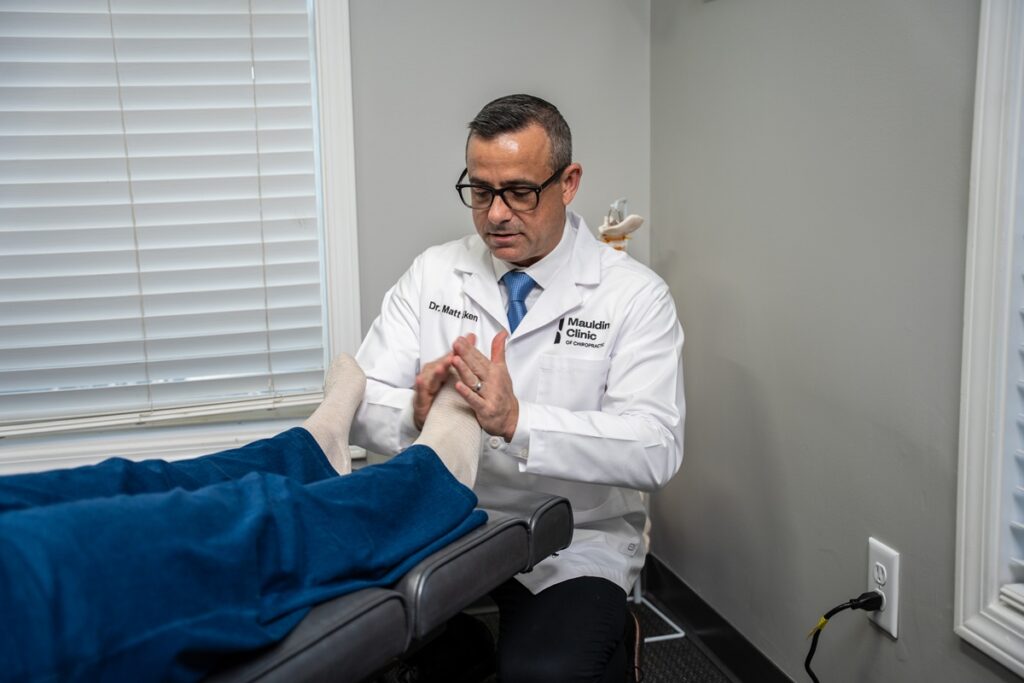
Chiropractic care offers a drug-free, non-surgical approach to evaluating and managing neck pain. At The Mauldin Clinic, Dr. Matt Eiken takes a thorough, individualized approach to understanding what’s driving each patient’s symptoms. That typically involves a detailed health history, a physical and postural examination, and an assessment of spinal mobility and muscle function.
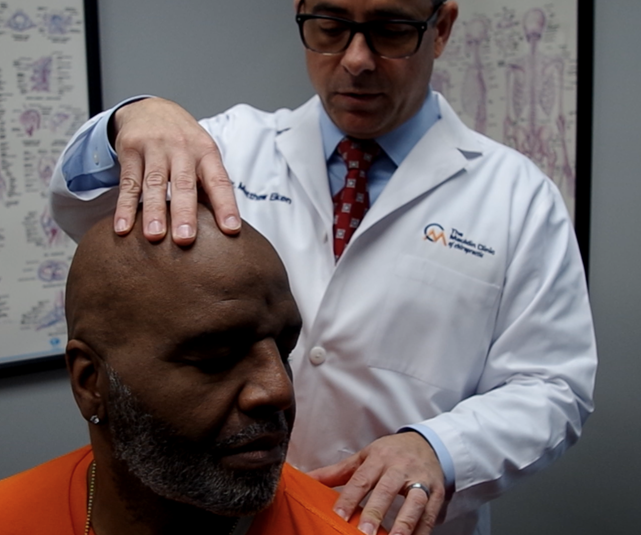
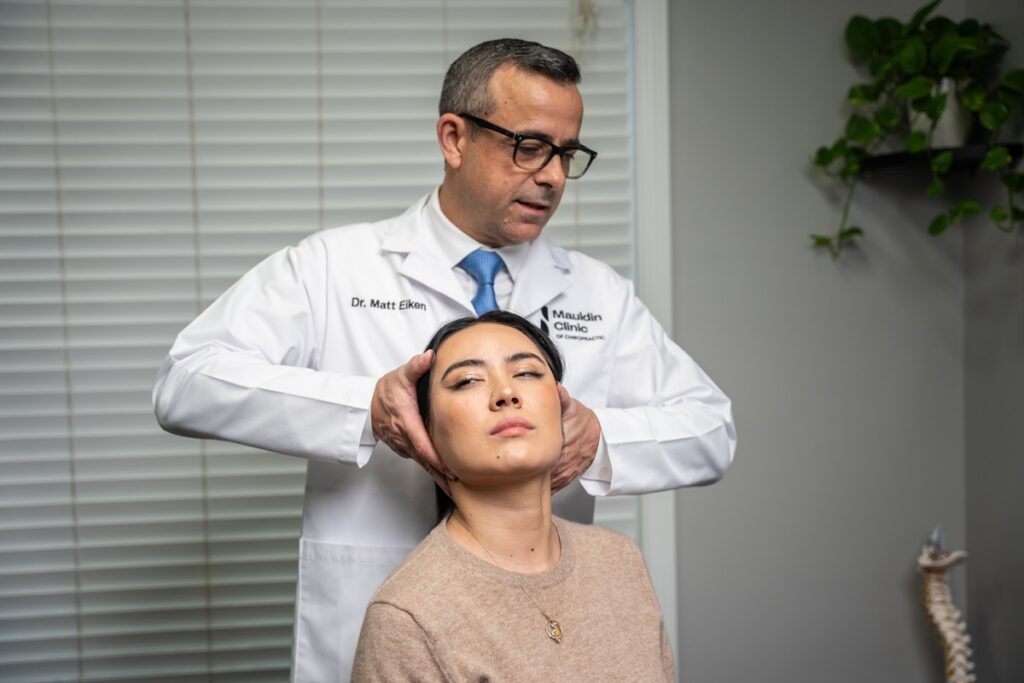
Chiropractic adjustments — careful, controlled movements applied to specific joints in the cervical spine — are designed to restore normal joint mechanics, reduce local inflammation, and take pressure off irritated nerve tissue. Evidence from organizations like the American College of Physicians and reviews published in the Cochrane Library suggests that spinal manipulation is a reasonable, effective option for managing acute and chronic neck pain as part of a broader conservative care approach.
Beyond adjustments, chiropractic care often includes soft tissue work to address muscle tension, postural retraining to reduce the daily stress on your cervical spine, and specific corrective exercises to strengthen the muscles that support good neck alignment. The goal at The Mauldin Clinic is never just to relieve pain in the short term — it’s to help patients in Mauldin, SC understand the root of their problem and build better habits for long-term spinal health.
Practical Tips for Neck Pain Relief
There are several simple, practical steps you can take at home to reduce the strain on your neck and support your recovery. These aren’t replacements for professional care, but they’re meaningful habits that can make a real difference over time.
First, take an honest look at your workstation setup. Your computer monitor should be at roughly eye level so your head isn’t angled downward. Your chair should support your lower back, and your feet should rest flat on the floor. These ergonomic basics reduce the forward head posture that is such a common driver of neck pain.
Second, be mindful of how much time you spend looking down at your phone. Try holding your device at eye level when using it for extended periods, or take regular breaks to bring your chin up and gently move your neck through its natural range of motion. A simple chin tuck exercise — drawing your chin straight back to create a slight “double chin” — helps retrain the deep cervical flexor muscles and counteract forward head posture.
Sleep position matters too. Sleeping on your back or your side with a supportive pillow that keeps your head and neck aligned with your spine is generally preferable to stomach sleeping. Stomach sleeping forces sustained neck rotation and can leave you waking up sore and stiff.
When to See a Chiropractor
If your neck pain has lasted more than a few days, is getting progressively worse, or is affecting your ability to carry out everyday activities, it’s a good idea to have it professionally evaluated. Neck pain that’s accompanied by numbness or tingling in the arm or hand, weakness in the arm, or difficulty with balance and coordination warrants prompt attention — these can be signs of nerve involvement that need thorough assessment.
There are also certain red flags that should prompt you to seek immediate medical care rather than chiropractic: neck pain following a significant head or neck injury, pain accompanied by a high fever and stiff neck, or any symptoms that come on very suddenly and severely without a clear cause. In those cases, Dr. Matt Eiken and the team at The Mauldin Clinic will always refer out to the appropriate provider when something falls outside the scope of conservative chiropractic care.
For the vast majority of patients, however, neck pain falls squarely within what chiropractic care is well-equipped to evaluate and address. Earlier intervention typically leads to better outcomes, so don’t wait until the pain becomes unbearable before reaching out.
|
Common Neck Pain Trigger |
What’s Happening |
How It Shows Up |
|---|---|---|
|
Forward Head Posture |
Increased load on cervical joints and muscles |
Chronic stiffness, upper back tightness, headaches |
|
Muscle Strain / Tension |
Overworked or chronically tight cervical muscles |
Aching, tenderness, trigger point pain |
|
Joint Dysfunction |
Restricted spinal joint movement, inflammation |
Stiffness, reduced range of motion, clicking |
|
Disc Herniation / Degeneration |
Disc material pressing on nerve roots |
Arm pain, numbness, tingling (radiculopathy) |
|
Whiplash Injury |
Rapid cervical acceleration-deceleration trauma |
Pain, stiffness, headaches after accident |
|
Stress and Poor Sleep |
Sustained muscle guarding, awkward sleep position |
Morning stiffness, tension headaches |
Common Myths About Neck Pain
Myth: Neck pain always goes away on its own, so there’s no need to get it checked.
Fact: While some mild neck pain does resolve with rest, chronic or recurring neck pain is often a sign of an underlying mechanical issue that won’t correct itself without intervention. Ignoring it can allow the problem to progress and become more difficult to address over time.
Myth: If you can still move your neck, the pain can’t be serious.
Fact: Range of motion is not a reliable indicator of severity. Many significant issues — including disc herniation and nerve root compression — can be present even when someone still has reasonable movement. Pain with movement, weakness, or radiating symptoms are all reasons to seek evaluation.
Myth: Chiropractic adjustments to the neck are dangerous.
Fact: Chiropractic care of the cervical spine has been studied extensively. Major health organizations, including the American College of Physicians, recognize spinal manipulation as a safe and appropriate first-line treatment option for neck pain when performed by a qualified professional. Dr. Matt Eiken conducts a thorough evaluation before any care is recommended.
Myth: Neck pain is just part of getting older and there’s nothing you can do about it.
Fact: While some degenerative changes are a normal part of aging, significant pain and disability are not inevitable. Many patients experience meaningful improvement in function and quality of life through chiropractic care, therapeutic exercise, and lifestyle modifications — regardless of age.
Myth: You should rest and avoid movement when your neck hurts.
Fact: Prolonged rest and immobility can actually slow recovery and lead to further stiffness. Evidence-based conservative care generally encourages gentle, controlled movement and activity as tolerated. Your chiropractor can guide you on what’s appropriate for your specific situation.
Final Thoughts from The Mauldin Clinic
Neck pain is incredibly common, but that doesn’t mean you have to simply accept it as part of your daily life. Whether it’s the result of years of desk work, a recent injury, stress, or the wear that comes with time, there are real, evidence-based options available to you right here in Mauldin, SC.
At The Mauldin Clinic, Dr. Matt Eiken is committed to helping patients in our community understand what’s driving their neck pain and how to address it in a way that’s safe, individualized, and built to last. We take the time to listen, to examine, and to explain — because we believe that an informed patient is an empowered patient. If neck pain has been slowing you down, we’d love the opportunity to help you feel like yourself again.
Frequently Asked Questions
How long does neck pain typically last?
The duration of neck pain varies widely depending on the cause. Acute neck pain from minor strain often improves within a few days to a couple of weeks. Chronic neck pain — lasting more than three months — typically has an underlying mechanical cause that benefits from professional evaluation and care.
Can neck pain cause headaches?
Yes. Cervicogenic headaches — headaches originating from the cervical spine — are a well-recognized condition. Muscle tension, joint dysfunction, and nerve irritation in the neck can all refer pain into the head. Addressing the source of the neck dysfunction often helps reduce associated headache frequency.
Is it safe to crack my own neck?
Self-manipulation of the neck is generally not recommended. While the temporary relief some people feel is real, repeated self-manipulation may create joint instability over time and doesn’t address the underlying cause of the problem. A trained chiropractor can apply precise, controlled adjustments in a much safer and more targeted way.
What’s the difference between neck pain and a pinched nerve?
General neck pain typically involves the muscles, joints, or discs of the cervical spine without direct nerve compression. A pinched nerve — or cervical radiculopathy — occurs when a disc or arthritic bone spur compresses a nerve root, causing symptoms like pain, numbness, or tingling that travel down the arm. A proper examination can help distinguish between the two.
Can stress really cause neck pain?
Absolutely. Psychological stress frequently manifests as physical tension in the neck and upper trapezius muscles. This chronic muscle guarding can lead to trigger points, restricted joint movement, and persistent pain. Addressing both the physical and lifestyle components is often key to lasting relief.
How does a chiropractor treat neck pain differently from a medical doctor?
Chiropractors focus on restoring normal joint mechanics, reducing muscle tension, and addressing postural and biomechanical contributors to neck pain — without medication or surgery. Medical doctors may prescribe anti-inflammatory medications or refer for imaging and specialist care. The two approaches can be complementary, and Dr. Matt Eiken will refer out when a case calls for additional medical evaluation.
TL;DR — Key Takeaways
-
Neck pain has many causes, including poor posture, muscle strain, joint dysfunction, disc problems, and trauma — and most cases involve more than one contributing factor.
-
Forward head posture from screen use is one of the fastest-growing drivers of neck pain in modern life, placing dramatically increased mechanical stress on the cervical spine.
-
Chiropractic care offers a drug-free, evidence-supported approach to evaluating and managing neck pain by addressing its root mechanical causes.
-
Simple habits — like improving your workstation ergonomics, adjusting your sleep position, and reducing prolonged screen time — can meaningfully reduce your risk of chronic neck pain.
-
If your neck pain is persistent, worsening, or accompanied by arm symptoms, it’s time to have it professionally evaluated — Dr. Matt Eiken and the team at The Mauldin Clinic in Mauldin, SC are here to help.